M.Des.
Profile

HARMONY: GUARDIANS OF BIODIVERSITY- PLAYABLE INTERVENTIONS FOR BIODIVERSITY AWARENESS

  • Biodiversity Awareness
  • Play-based Learning
  • Role play
  • Problem Solving
  • Board Game
DIVYANSHU SINGH
Mr. Shekhar Bhattacharjee
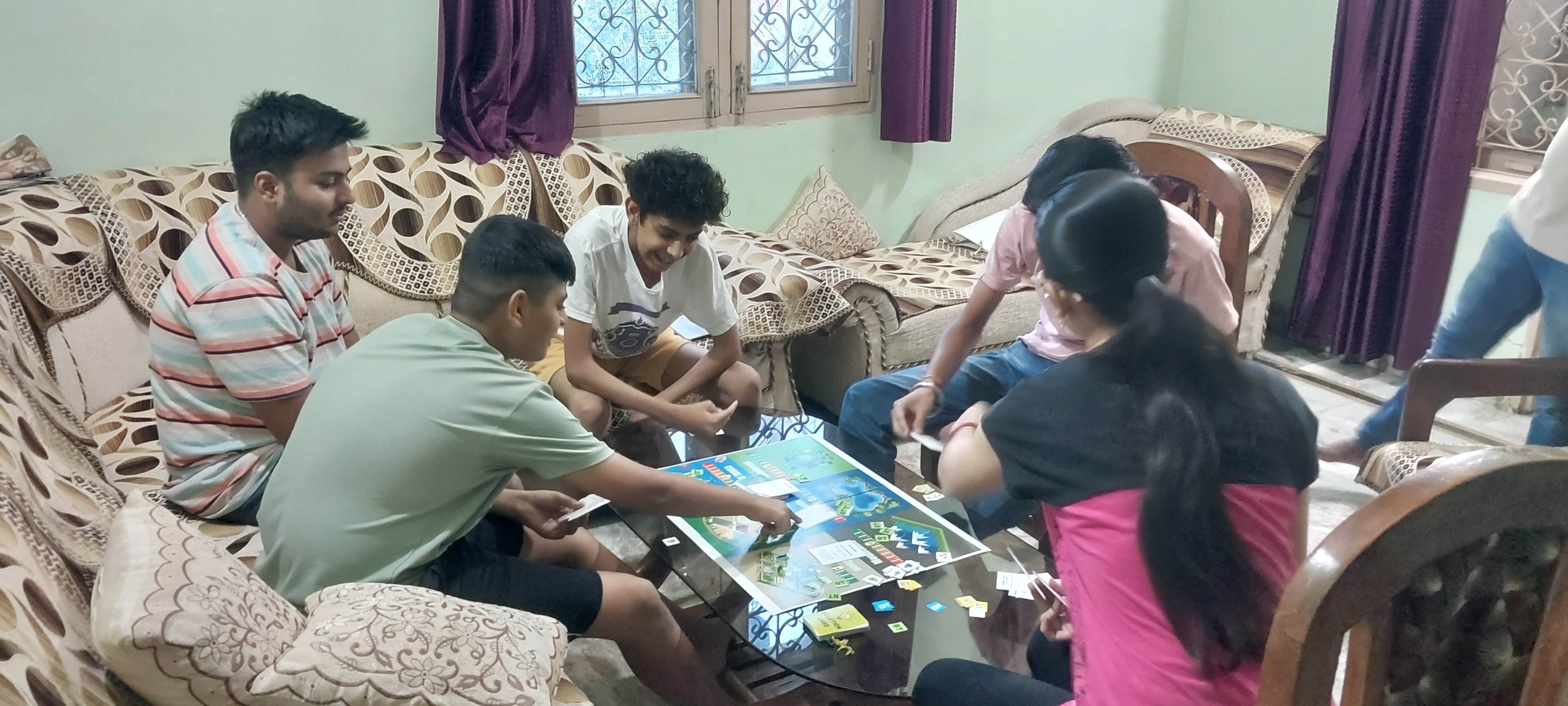
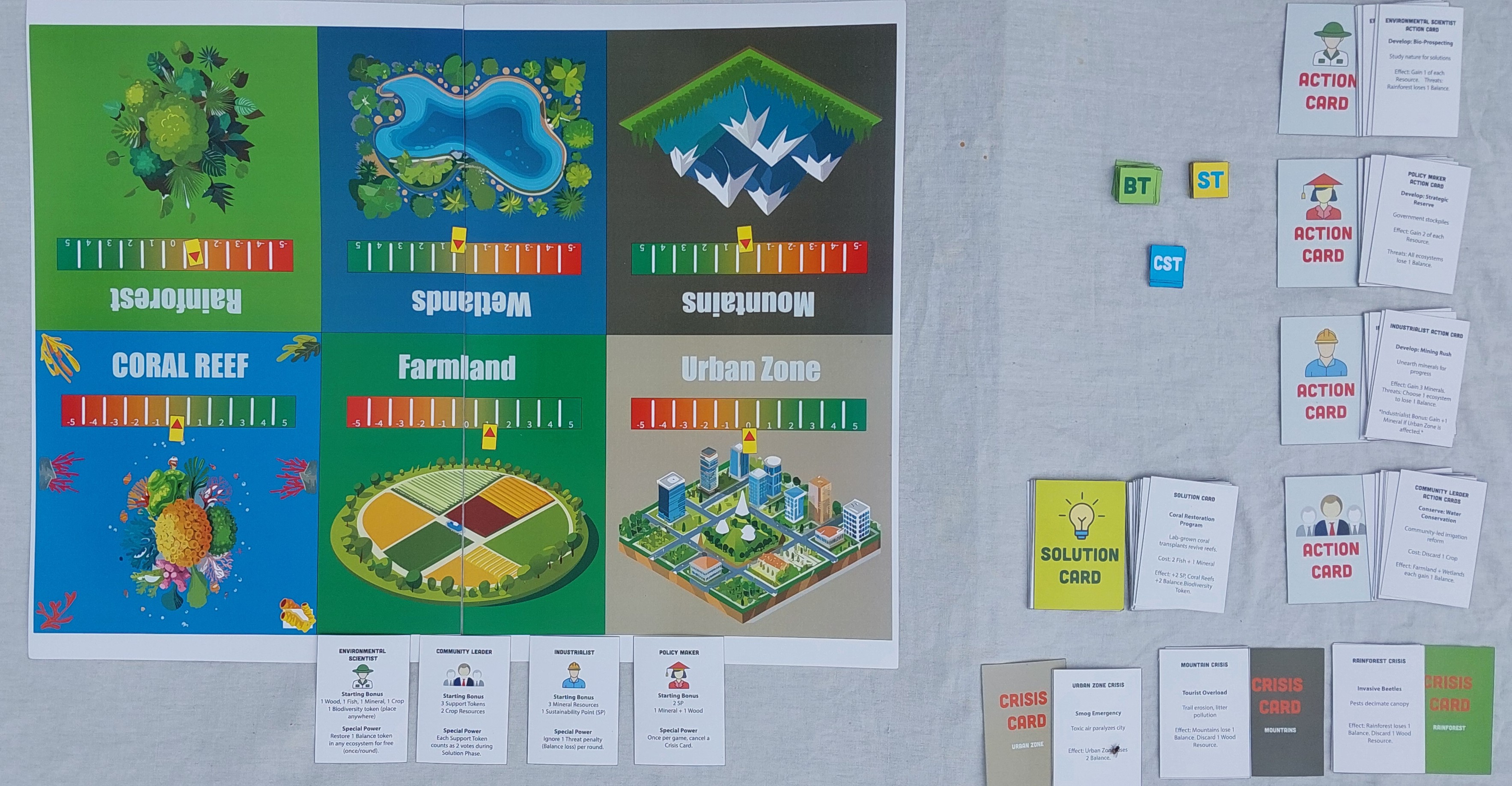
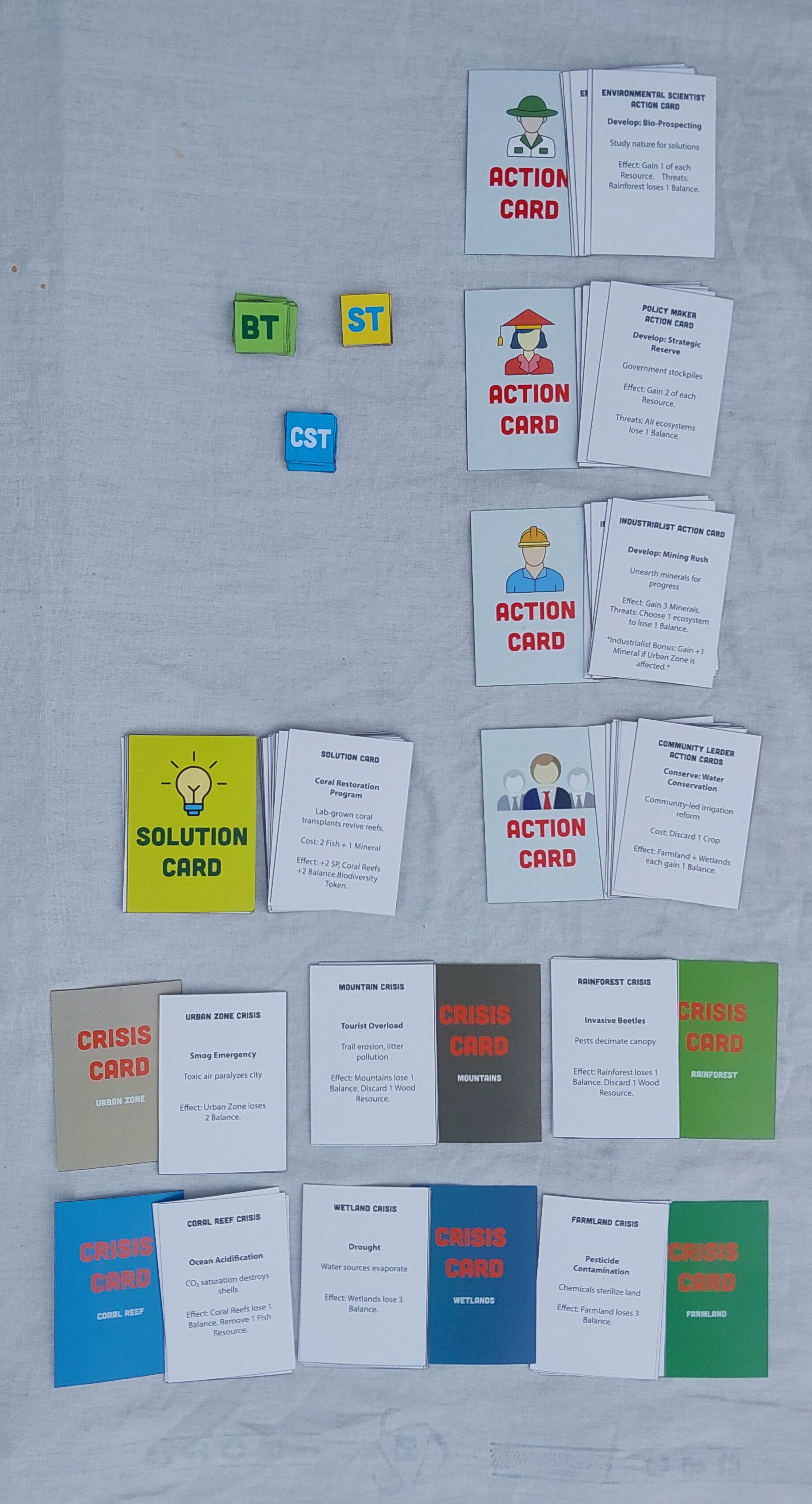
HARMONY: Guardians of Biodiversity is a design-led educational board game developed at the National Institute of Design (NID) to address gaps in youth understanding of biodiversity conservation as an interconnected, multi-stakeholder system. Aimed at ages 11–18+, the project transforms complex ecological challenges into experiential, play-based learning. Grounded in quantitative surveys, qualitative interviews with teenagers and experts, and field research with organisations such as WWF Bhopal and The Nature Volunteers, the project identified limited systems thinking and disengagement from conventional environmental education. The game immerses players in the fictional ecosystem of Veridia Island, where they assume stakeholder roles including Industrial Developer, Conservation Biologist, Local Community Leader, and Government Regulator. Through negotiation, crisis events, and shared decision-making, players navigate real-world trade-offs between ecological and socio-economic priorities. The shared victory mechanic reinforces collaboration, empathy, and systems thinking, aligning the project with India’s National Biodiversity Action Plan and promoting responsible environmental citizenship.
DIVYANSHU SINGH
DIVYANSHU SINGH
DIVYANSHU SINGH
Profile
DIVYANSHU SINGH
M.Des.
Mr. Shekhar Bhattacharjee
HARMONY: GUARDIANS OF BIODIVERSITY- PLAYABLE INTERVENTIONS FOR BIODIVERSITY AWARENESS
HARMONY: Guardians of Biodiversity is a design-led educational board game developed at the National Institute of Design (NID) to address gaps in youth understanding of biodiversity conservation as an interconnected, multi-stakeholder system. Aimed at ages 11–18+, the project transforms complex ecological challenges into experiential, play-based learning. Grounded in quantitative surveys, qualitative interviews with teenagers and experts, and field research with organisations such as WWF Bhopal and The Nature Volunteers, the project identified limited systems thinking and disengagement from conventional environmental education. The game immerses players in the fictional ecosystem of Veridia Island, where they assume stakeholder roles including Industrial Developer, Conservation Biologist, Local Community Leader, and Government Regulator. Through negotiation, crisis events, and shared decision-making, players navigate real-world trade-offs between ecological and socio-economic priorities. The shared victory mechanic reinforces collaboration, empathy, and systems thinking, aligning the project with India’s National Biodiversity Action Plan and promoting responsible environmental citizenship.
DIVYANSHU SINGH
DIVYANSHU SINGH
DIVYANSHU SINGH