M.Des.
Profile

Optimizing HCL Software for Efficiency, User Experience & Scalability

  • UX Design
  • Customer Experience
  • Construction Technology
  • Analytics Dashboard
  • Scalable Systems
SRASHTI SONI
Dr. C S Susanth
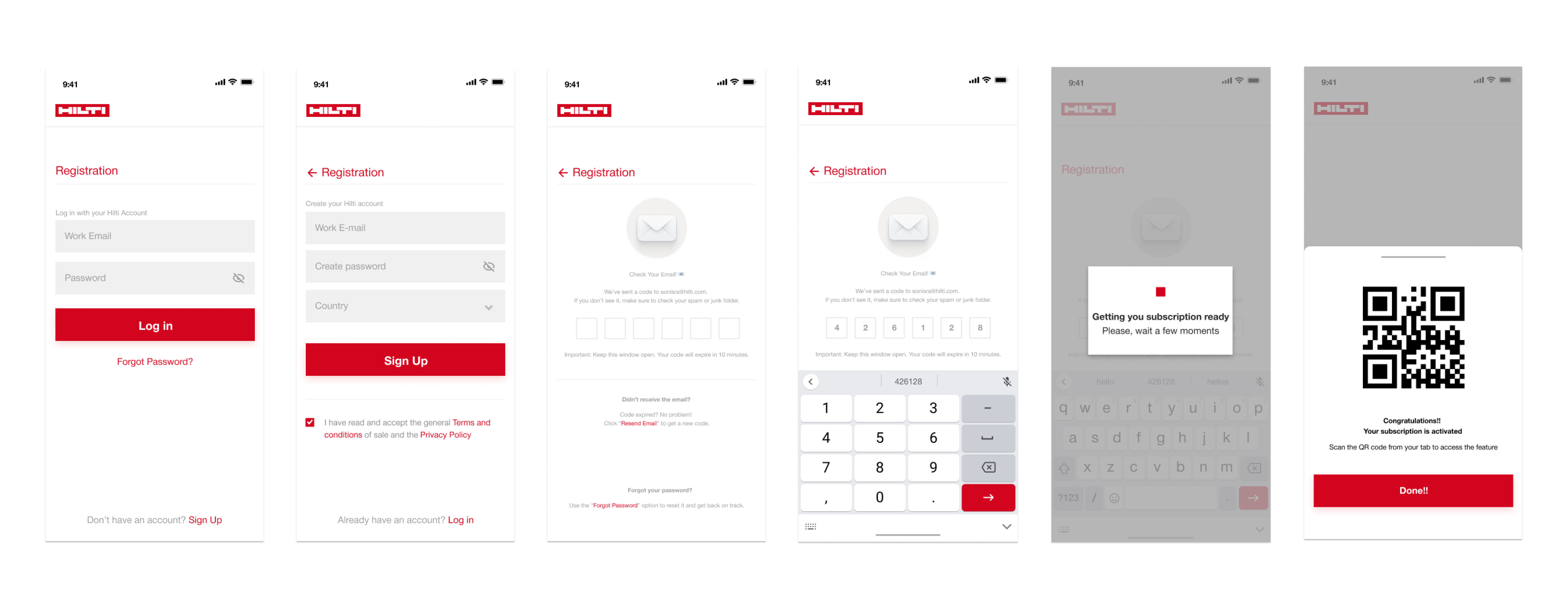
This project focuses on enhancing the user experience, operational efficiency, and scalability of Hilti Construction Layout (HCL), a critical digital tool used across global construction sites. Developed by the Measuring Business Unit at Hilti Technology Solutions India, HCL connects digital planning with on-site execution. During the internship, the project examined how complex licensing, onboarding, and activation processes affect user adoption in high-pressure field environments. Research included stakeholder interviews, secondary studies, and on-site observations, mapped through user flows, stakeholder frameworks, and journey mapping to identify friction points. A key focus was ensuring consistent workflows across devices such as controllers, tablets, and layout tools. Design interventions included QR-based activation flows, self-service subscription management, and an internal analytics dashboard for real-time usage tracking. These solutions reduce reliance on support teams, improve user independence, and provide actionable insights, laying the foundation for scalable, user-centric growth in construction technology products.
SRASHTI SONI
Profile
SRASHTI SONI
M.Des.
Dr. C S Susanth
Optimizing HCL Software for Efficiency, User Experience & Scalability
This project focuses on enhancing the user experience, operational efficiency, and scalability of Hilti Construction Layout (HCL), a critical digital tool used across global construction sites. Developed by the Measuring Business Unit at Hilti Technology Solutions India, HCL connects digital planning with on-site execution. During the internship, the project examined how complex licensing, onboarding, and activation processes affect user adoption in high-pressure field environments. Research included stakeholder interviews, secondary studies, and on-site observations, mapped through user flows, stakeholder frameworks, and journey mapping to identify friction points. A key focus was ensuring consistent workflows across devices such as controllers, tablets, and layout tools. Design interventions included QR-based activation flows, self-service subscription management, and an internal analytics dashboard for real-time usage tracking. These solutions reduce reliance on support teams, improve user independence, and provide actionable insights, laying the foundation for scalable, user-centric growth in construction technology products.
SRASHTI SONI