M.Des.
Profile

Personalising Customer Navigator

  • Enterprise UX Design
  • Personalization Framework
  • Context-Aware Interfaces
  • UX Research
  • Role-Based Dashboard
ANMOL MAHENDRA KUMAR CHAUDHARY
Mr. Chakradhar Saswade
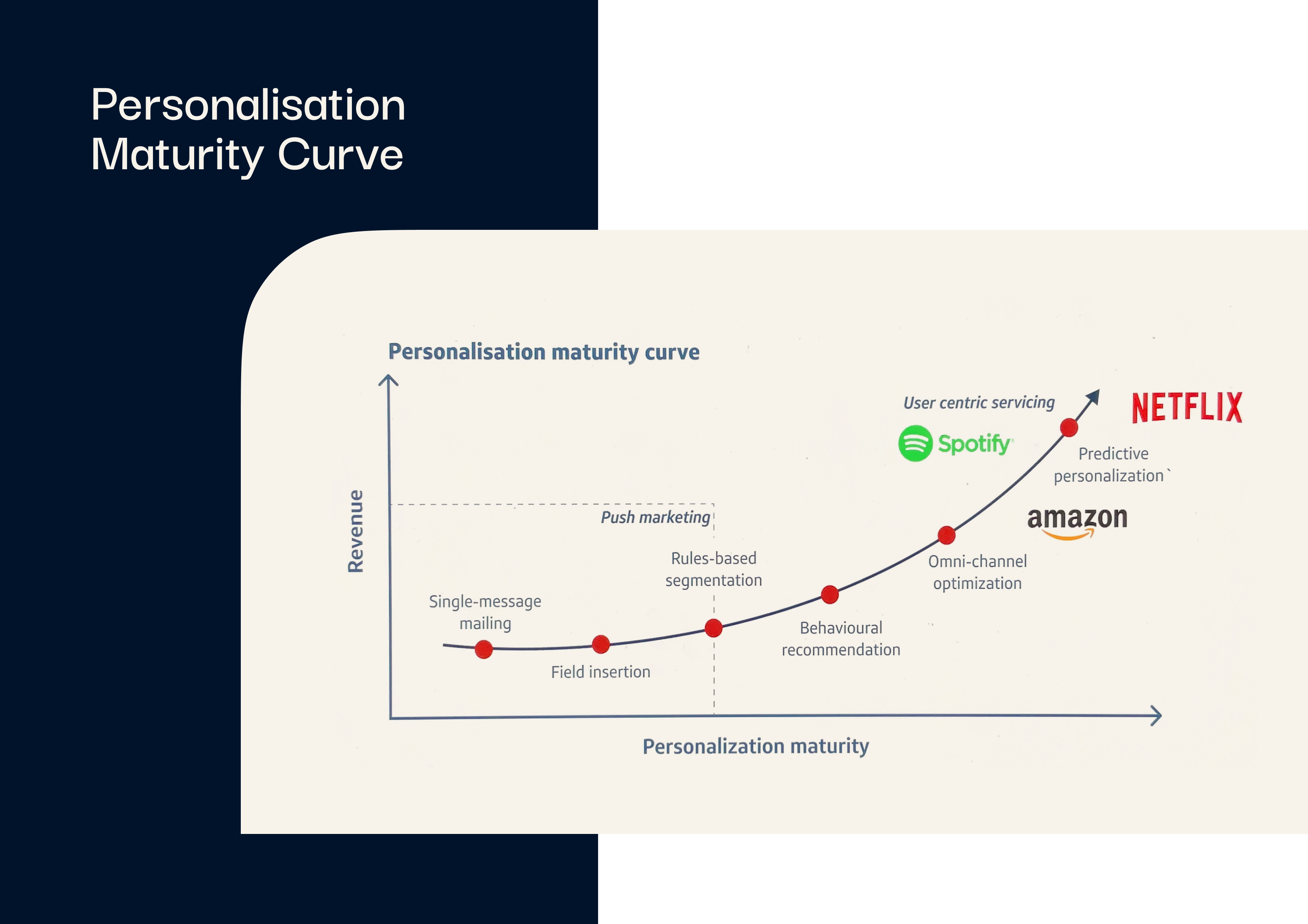
This graduation project focuses on designing a deep personalization framework for the Customer Navigator platform, an enterprise tool supporting roles such as Business Analysts, Compliance Managers, and Process Managers. The objective is to enhance user experience through role-aware, behavior-driven, and adaptive interfaces that move beyond surface-level customization. The project began with primary research to understand user roles, workflows, and pain points, followed by mapping touchpoints where personalization could add value, including dashboards, notifications, and task recommendations. Benchmark analysis of platforms such as Netflix, Amazon, Salesforce, and Google Classroom informed adaptive UI strategies. The solution proposes modular, dynamic UI components that respond to role-based permissions, task frequency, and usage patterns, supported by a scalable design system. Emphasis was placed on balancing automation with user control, ensuring transparency and override options. The final output includes high-fidelity mockups, interaction flows, and personalization strategies to improve efficiency, engagement, and satisfaction across enterprise users.
ANMOL MAHENDRA KUMAR CHAUDHARY
Profile
ANMOL MAHENDRA KUMAR CHAUDHARY
M.Des.
Mr. Chakradhar Saswade
Personalising Customer Navigator
This graduation project focuses on designing a deep personalization framework for the Customer Navigator platform, an enterprise tool supporting roles such as Business Analysts, Compliance Managers, and Process Managers. The objective is to enhance user experience through role-aware, behavior-driven, and adaptive interfaces that move beyond surface-level customization. The project began with primary research to understand user roles, workflows, and pain points, followed by mapping touchpoints where personalization could add value, including dashboards, notifications, and task recommendations. Benchmark analysis of platforms such as Netflix, Amazon, Salesforce, and Google Classroom informed adaptive UI strategies. The solution proposes modular, dynamic UI components that respond to role-based permissions, task frequency, and usage patterns, supported by a scalable design system. Emphasis was placed on balancing automation with user control, ensuring transparency and override options. The final output includes high-fidelity mockups, interaction flows, and personalization strategies to improve efficiency, engagement, and satisfaction across enterprise users.
ANMOL MAHENDRA KUMAR CHAUDHARY