M.Des.
Profile

Design for Radical Interdependence:

  • Systems Design
  • Regenerative Design Strategies
  • Ladakh's Cultural-Ecological Transition
  • Waste to Energy Systems
  • Traditional Indigenous Ecological Knowledge Systems
VIGNESH KAROTE
Ms. Neelima Hasija
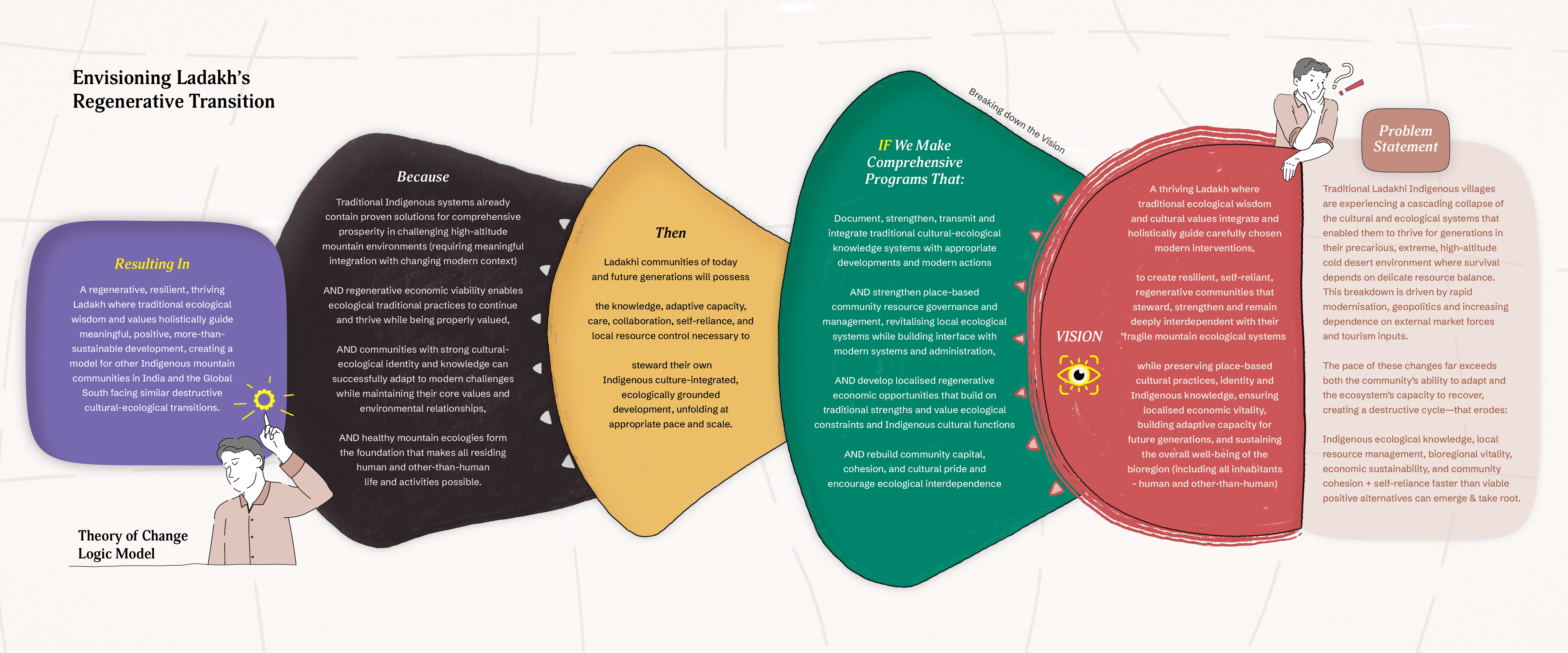
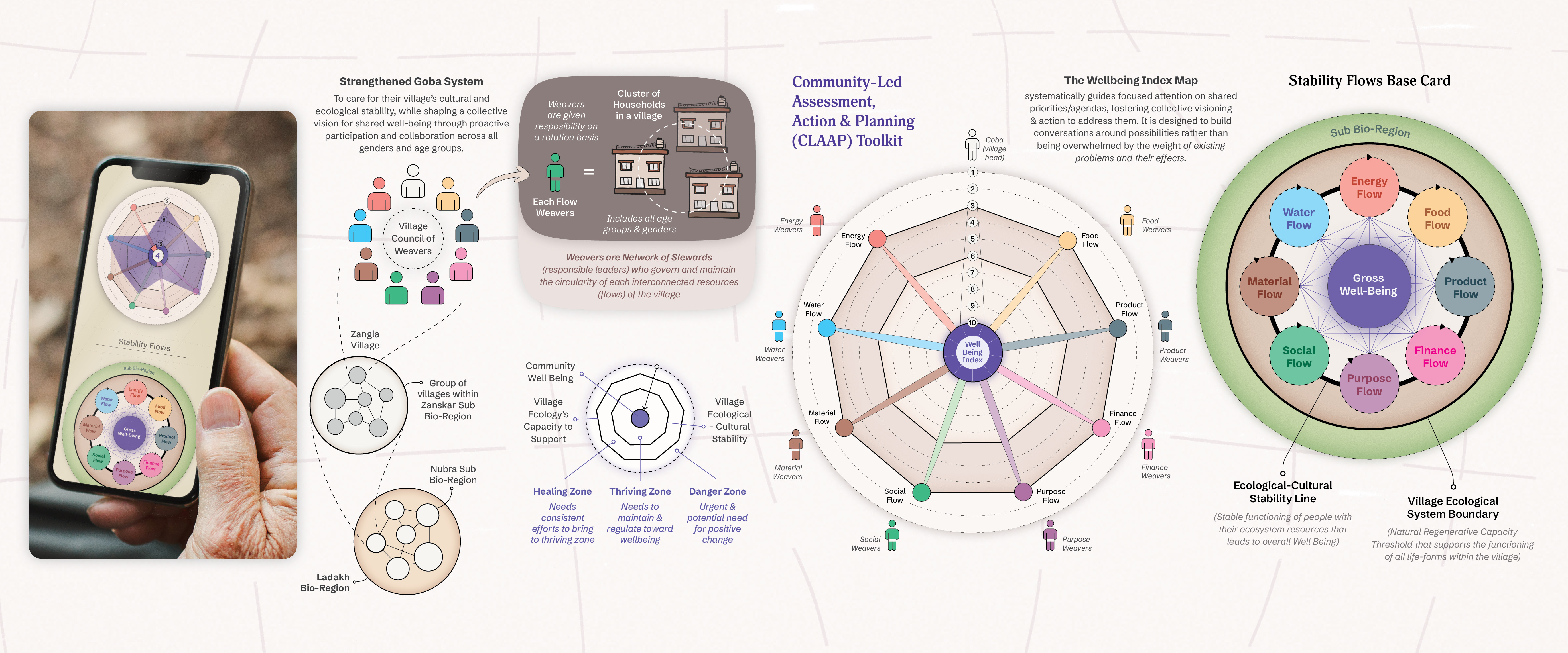
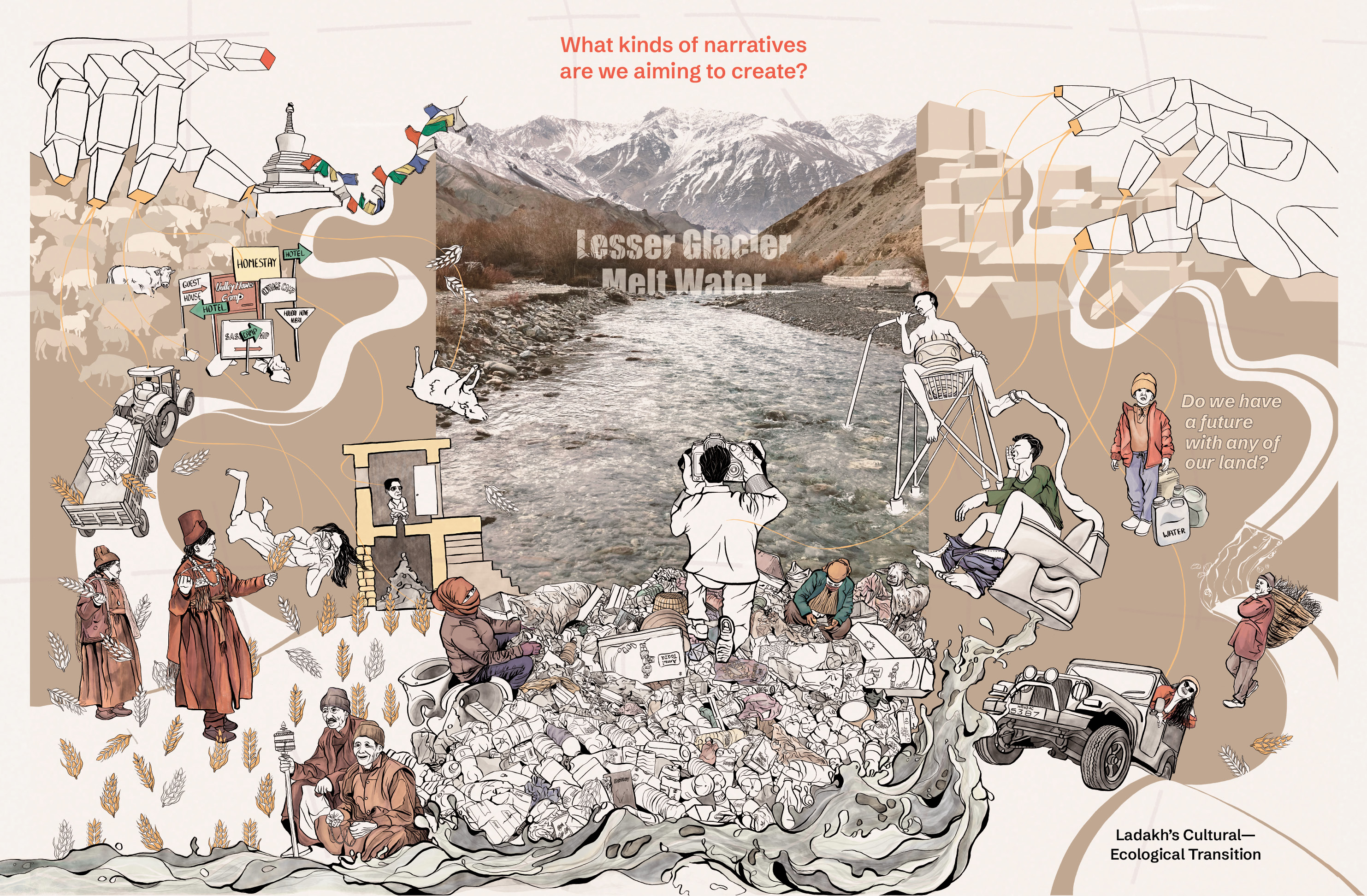
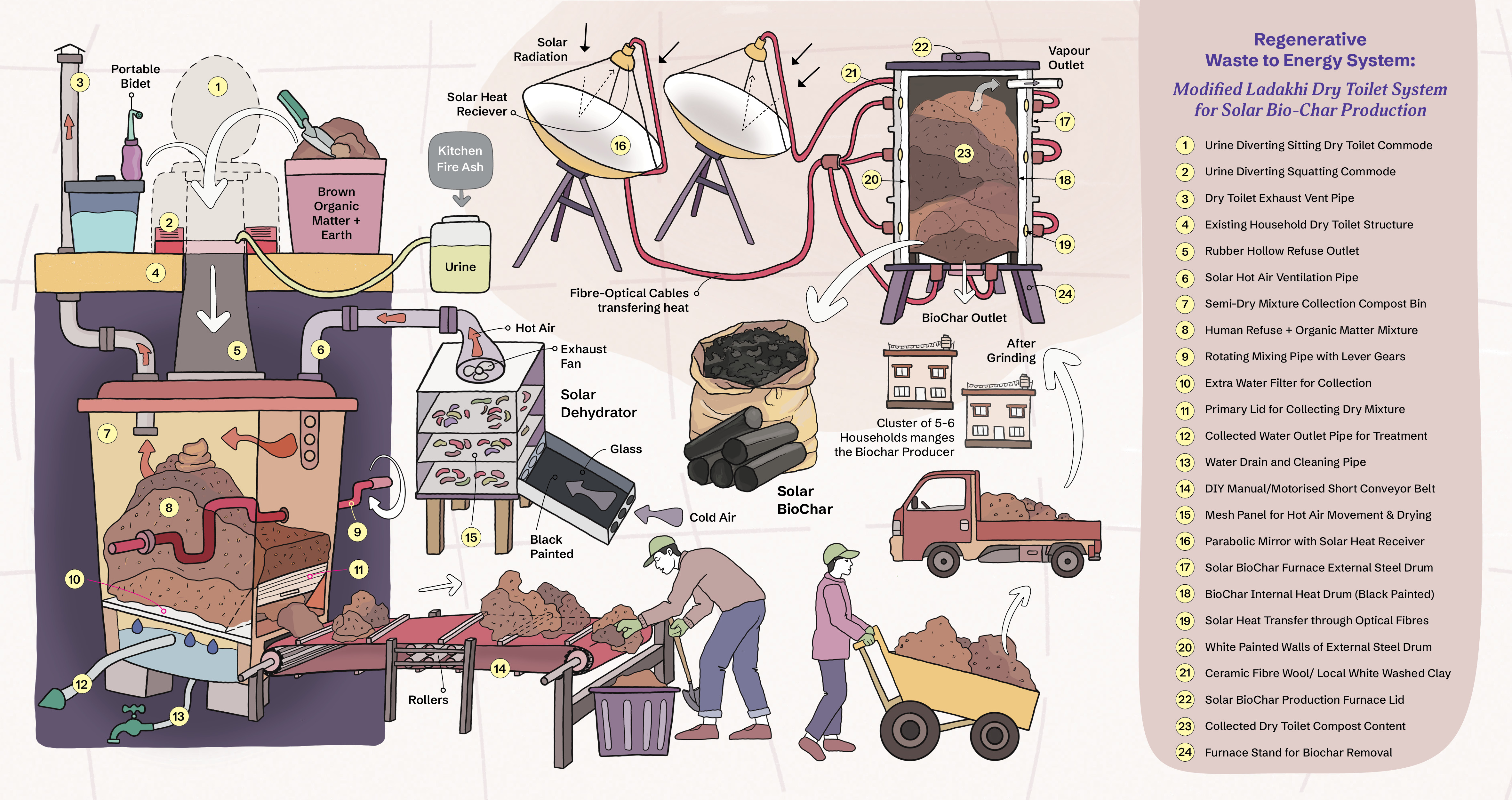
As global cities pursue sustainability, Indigenous communities in Ladakh, once deeply attuned to their high-altitude cold desert bioregions, are increasingly drawn toward extractive capitalist-driven development that threatens fragile ecosystems. This shift began five decades ago with the region’s exposure to tourism and modernisation. This project explores how creative cultural-ecological strategies rooted in Indigenous wisdom can reconcile modern aspirations with ecological limits. Framed as design research, the project functions as a toolkit, guide, and case study proposing place-based, community-led regenerative pathways for Ladakh’s transitioning villages and other eco-sensitive regions in India and the Global South. Key outcomes include a Theory of Change vision, a Community-Led Assessment, Action and Planning toolkit, and experimental village models envisioned as Regenerative Living Hubs with integrated value chains and waste-to-energy systems. Together, these strategies encourage collective regenerative thinking, stewardship of bioregional resources, and more conscious, responsible ways of living and designing within nature’s interconnected web.
VIGNESH KAROTE
VIGNESH KAROTE
VIGNESH KAROTE
VIGNESH KAROTE
Profile
VIGNESH KAROTE
M.Des.
Ms. Neelima Hasija
Design for Radical Interdependence:
As global cities pursue sustainability, Indigenous communities in Ladakh, once deeply attuned to their high-altitude cold desert bioregions, are increasingly drawn toward extractive capitalist-driven development that threatens fragile ecosystems. This shift began five decades ago with the region’s exposure to tourism and modernisation. This project explores how creative cultural-ecological strategies rooted in Indigenous wisdom can reconcile modern aspirations with ecological limits. Framed as design research, the project functions as a toolkit, guide, and case study proposing place-based, community-led regenerative pathways for Ladakh’s transitioning villages and other eco-sensitive regions in India and the Global South. Key outcomes include a Theory of Change vision, a Community-Led Assessment, Action and Planning toolkit, and experimental village models envisioned as Regenerative Living Hubs with integrated value chains and waste-to-energy systems. Together, these strategies encourage collective regenerative thinking, stewardship of bioregional resources, and more conscious, responsible ways of living and designing within nature’s interconnected web.
VIGNESH KAROTE
VIGNESH KAROTE
VIGNESH KAROTE
VIGNESH KAROTE